


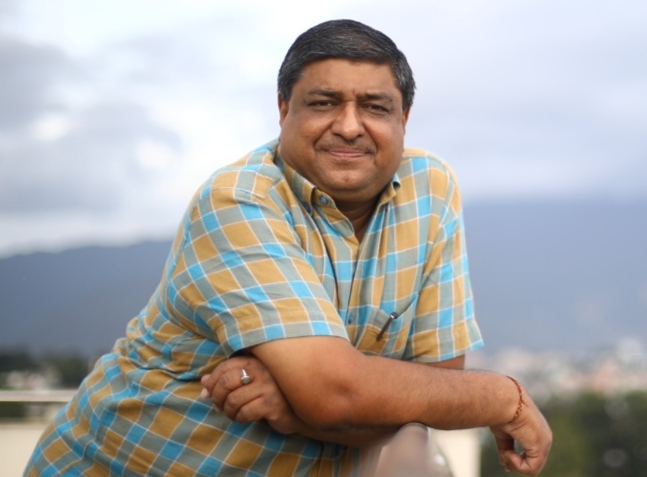

Sunil Babu Pant: A guardian of LGBTIQA+ community

Quick facts
Born on June 1972 in Gorkha
Went to Laxmi Secondary School, Gorkha
Graduated in Computer Science from Ukraine and Belarus
Became the member of first constituent assembly in 2008
Partner to Peter Neil
 I saw the oppression of gay men during my time in Minsk, Belarus, where I was studying for my master’s degree in computer science. The queer bashing, the posters in hospitals telling people to ‘beware of gays’, the police raids and beatings were commonplace. Throughout my stay there, I didn’t have contact with the subterranean gay life that existed there. So it was in Japan where I was first exposed to my own sexuality. I had gone there to work as a volunteer.
What I found changed me irrevocably. For three days I could not sleep, I was deeply scared. In order to reconcile my own view of myself and the world, I talked to a gay book seller and read every useful book I could get my hands on, including works on Hinduism and sexuality.
Next, I went to Hong Kong for further studies at the University of Science and Technology. What I found there confused and disoriented me. Expecting Hong Kong to be a modern society with liberal ways, I was open about my sexual orientation. I was wrong. People there were not comfortable with my openness. I abandoned my studies and returned to Nepal after just six months.
I was less interested in computer studies by that time. I wanted to become a social worker instead. In 1999, I went to Odisha as a volunteer to bring aid to the victims of the super cyclone that killed over 10,000 people. I stayed 10 months there. While I was there, I was also introduced to Buddhism.
Returning to Nepal, and by now certain of the sort of path my life would take, I started to meet other people from LGBTIQA+ community and learned how unpleasant and difficult their lives were. So, I decided to do something about this, and in 2001 formed the Blue Diamond Society, Nepal’s first LGBTIQA+ organization.
Blue Diamond started off with AIDS prevention work, the only way then available to get funding and NGO registration. The organization swiftly moved into monitoring and reporting on human rights abuses. We also instituted a human rights training program. We set up an office in Kathmandu, and quickly spread to other towns and cities.
The activities Blue Diamond was involved in culminated in 2007 in an incredible victory in the Supreme Court, in Sunil Babu Pant and Others vs. Government of Nepal and Others. An interim government was in power, from which I had hoped for much, but it proved uninterested in reforms, so Blue Diamond decided to go to court to fight the discriminatory laws and attitude towards the gay community. We won the landmark case, and, in a wide-ranging decision, the court ruled that the government should recognize the third gender and review and reform all laws that had a discriminatory basis.
The government accepted the ruling and Nepal thus became the first country in the world to recognize a third sex and the first in South Asia to legalize homosexuality. The upshot also included the formation of a seven-member same Sex Marriage Committee. The ruling basically decriminalized homosexuality and allowed study on same-sex marriage in Nepal in 2008. And this decision became a reference for many other countries.
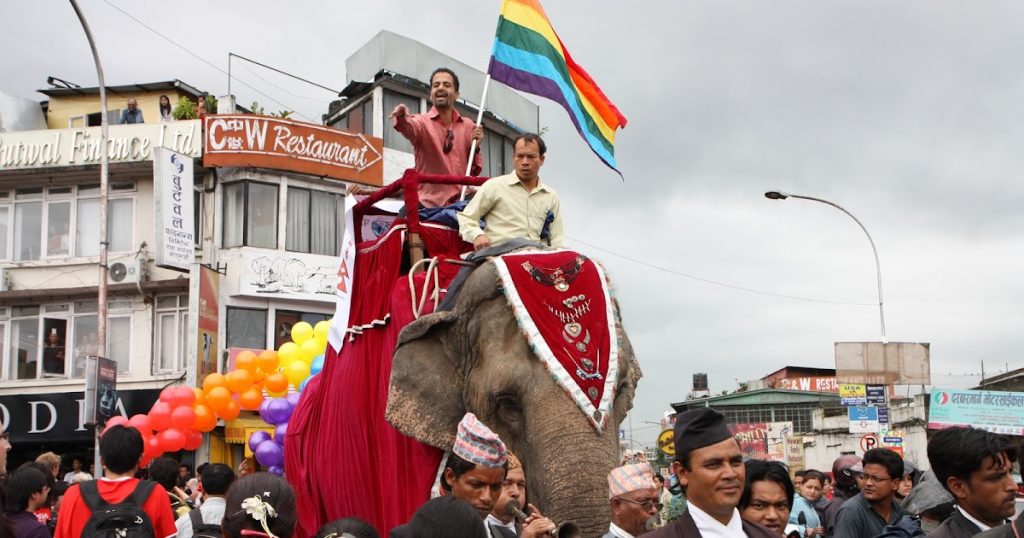 This victory brought me to the attention of Kathmandu’s political world. Always looking for votes in the highly fractious bull pit of Nepal’s politics, a small offshoot communist party, the Communist Party of Nepal (United), invited Blue Diamond to participate in its campaign for the elections for the new Constituent Assembly in 2008.
We asked political parties to put sexual and gender minorities in their manifestos. The Maoist party, which joined the peaceful politics following the 2006 Comprehensive Peace Agreement, was the first to do so.
In the CA election, the CPN (United) won five seats under the proportional representation system, all in the fifteen districts in which Blue Diamond had offices and conducted election campaigns. By the time, we had over 150,000 active members in the organization.
After the election I became the first openly gay parliamentarian in Asia. I took the fight for gay rights directly into the Constituent Assembly, whose task was to draft a new constitution.
I was heavily involved in the drafting of the Fundamental Rights Chapter and secured agreements from all the major parties on the inclusion of provisions to include non-discrimination on grounds of gender and sexual orientation.
Sex, gender and sexuality were not something politely discussed in those days. Despite a very tolerant attitude to the sexual act itself, everyone got married and was expected to produce an heir. There was nothing approaching any recognition of the West’s current rigid differentiations of queer and straight and certainly no identifiable queer lifestyle.
Instead, there was a much more traditional acceptance of a third gender of men who adopted women’s dress and who, in accordance with Hindu tradition, danced and sang at weddings, births and festivals to bring good fortune and to entertain. These could be either castrated hijras, as in India, or uncastrated men from hill tribes, marunis in the hills of the west, notwas among the peoples of the plains, or metis in the hills of eastern Nepal.
Our society’s attitude toward gender and sexuality is gradually changing, but there is still a lot where we could improve on. The important thing is we need to continue this struggle and keep the debate alive.
About him
Madhav Dulal (Friend)
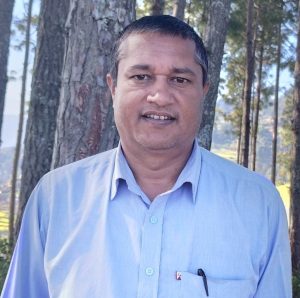 I have known him since he became the member of first Constituent Assembly. He is a guardian for LGBTIQA+ community. Not only that, he is an advocate for human rights and youths. He is a very friendly and approachable individual. I have not seen anyone who could continue his legacy in queer community yet. If he was into politics, he could have achieved much better than what the Rastriya Swatantra Party has done in a short period of time.
Renu Chand (Colleague)
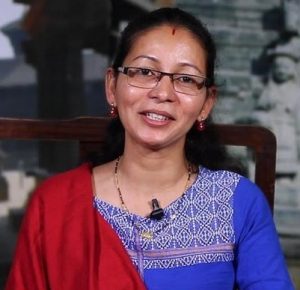 Before Sunil Babu Pant became a member of the first Constituent Assembly, Nepali politicians had no idea about LGBTIQA+ community and their issues. I give him full credit for making the country aware of this issue. After Pant, I have not seen anyone take up the cause with the same zeal. His legacy will live on.
Kiran Thapa (Family member)
 He is a big hearted person. Because of him, we have our own identity of LGBTIQA+ community. All the achievements we got legally, it’s all because of him. We were together in that movement but he was the one to show us the correct path. We can’t forget him, never. Even if we did, our history has his name written on the golden plate.

Usha Nepal: An inspiration to every working woman
Quick facts
- Born in Mahottari, Nepal
- Went to Balika Secondary School, Biratnagar
- Received a Bachelor’s in Arts from Banaras Hindu University, India
- Received a Master’s degree through Colombo Plan Scholarship in Patna, India
- Studies Law from Tribhuvan University, Kathmandu
- Became the first female CDO in 1989
 Being the first female Chief District Officer (CDO), which was traditionally a male domain, was certainly not easy. But I think all the life experiences I had gained up till that moment helped me prepare for the job.
I was born in a small village of Mahottari district, and at the time, we used to get homeschooled. Later, I joined a school in Biratnagar before moving to Banaras, India, with my family. I was a bright student from a young age. I dreamt of having a college degree and a career. But back then getting married was far more important for a woman than getting an education. I had many arguments with my parents because I didn’t want to get married until I had completed my studies, but my parents wouldn’t have any of it. I was married off at the age of 13. But my parents made sure that I was allowed to complete my education. My father-in-law agreed to pay for my education up until I completed my Bachelor’s degree, which I got from Banaras Hindu University (BHU), in India. I was fortunate that my in-laws were supportive of me getting my degree. This was despite my husband’s death just three years into our marriage.
We were living in Biratnagar at the time. After completing my education, I returned and became a teacher at the very school that I went to as a young girl. But I didn’t want to get stuck there, teaching all my life. I wanted to get a Master’s degree, but my family would not allow me. Luckily, I saw a notice about the Colombo Plan Scholarship, which for me was a perfect opportunity to do what I had always wanted to do. I applied for the scholarship, sat for a test in Kathmandu, and got selected. I left for Patna for my master’s degree.
Getting the master’s degree brought a lot more opportunities for me. I came to Kathmandu and started teaching at Tri Chandra College, and Ratna Rajya Laxmi Campus. I also met many people from academia and government officers. After some time of teaching, I started working at the Women’s Training Center in Lalitpur. I worked there for three years before being transferred to Dhankuta.
The reason I was transferred is because they needed someone to fill in the position there, since the royals were set to visit the training center. I didn’t have any problem working there since I did not have a lot of responsibility. I didn’t know how big of an opportunity that was. I worked there for nearly nine years, and met a lot of people associated with various British projects. This gave me a lot of exposure. After working in Dhankuta for nearly a decade, I wanted a new challenge. That is when I approached the Ministry of Industry, Commerce and Supplies for a transfer.
A lot of things happened in between my transfer and the day I became the first woman CDO. I left for the US to attend my fellowship, and even then, I used to get letters saying the paid leave I had earned had been canceled, although it worked out well in the end. So, there were a lot of people trying to make my work-life very difficult. There were a lot of hurdles I had to face, especially because I was among the few women who worked in a male dominant workspace. People tried to bring me down and take the position I had earned. A lot of tricks were played, and a lot of controversies were cooked. A newspaper even published an article claiming that I had falsified my date of birth.
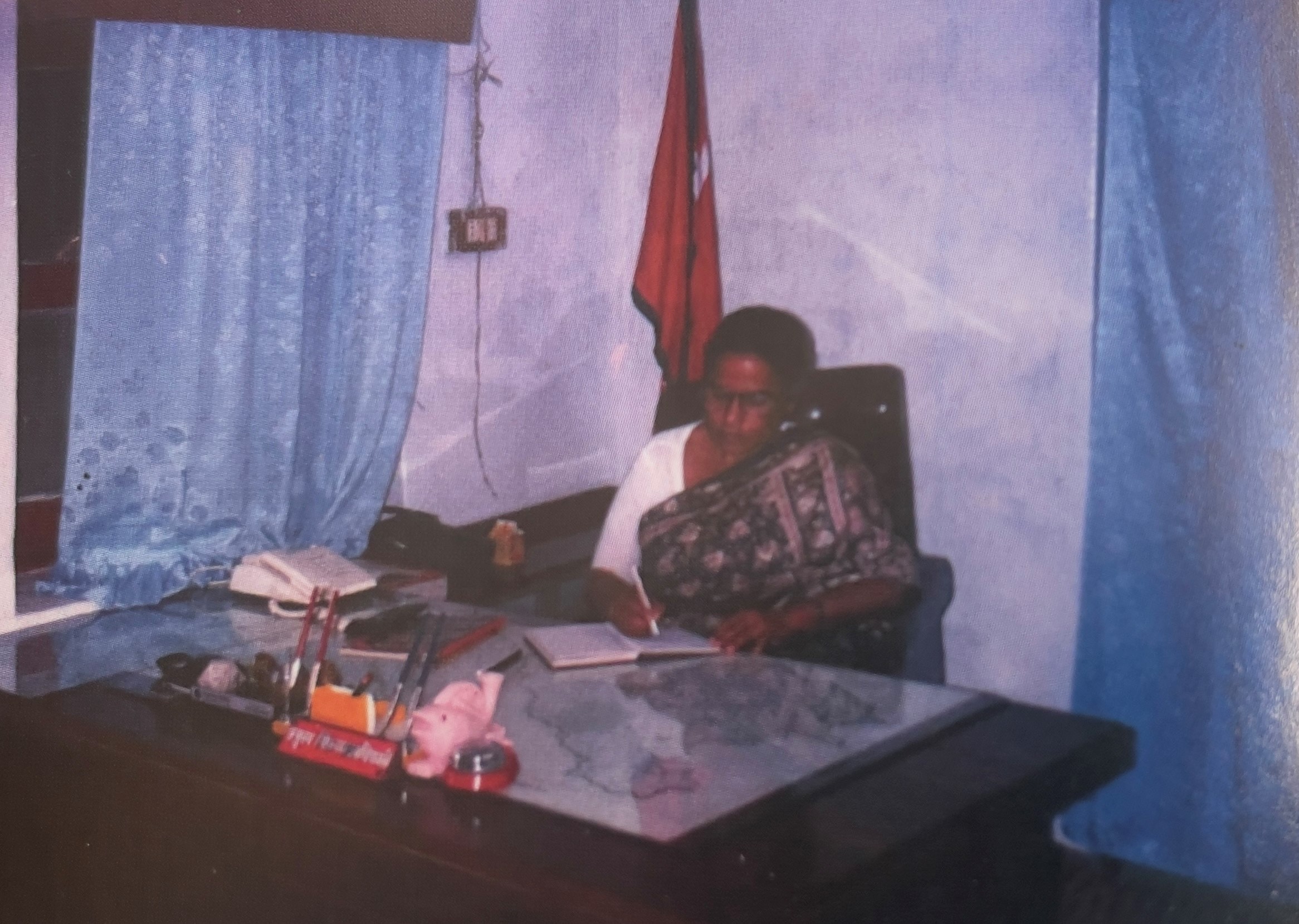 In the end, it turned out all right for me. I had done nothing wrong and I willing to defend myself. So, my suggestion to every working woman, from my own experience, is to always defend yourself when you know you are not in the wrong. You need to be straightforward and vocal if you want to go up the ladder in your career.
After being offered the position of CDO in Bhaktapur, there still were a lot of obstacles ahead of me. Most people had a problem with a woman being a district chief. They thought a woman couldn’t do the job. Even some of my colleagues would make comments like “Maybe we should start wearing a frock now”. It was their way of letting me know that I, a woman, was not capable of handling the CDO’s job. They also thought that I got the position because I had some relatives in the government. There were many rumors and baseless news articles regarding how I got the job, but I persevered and continued to do my work.
After the party-less Panchayat system came to an end, there were a lot of political changes in the country. It was around this time, I had the desire to go work in some rural part of Nepal. But the new home minister at the time, KP Sharma Oli, did not want me gone. Maybe it was because it would set a bad impression for the government to send the only woman CDO to a rural district. But I had made up my mind. I got to work in Solukhumbu, Mustang, and Parsa districts. There were still a few months left before my retirement when I was sent with a team to Jhapa in order to certify the Bhutanese refugees in the area. But, within seven days of working there, I was told that I was fired because of the dispute concerning my birth date. After my retirement from government services, I was elected as the Commissioner for the Election Commission in 2007, and was actually the first woman to become a commissioner.
If you stick to being honest, and not losing self-respect, it is possible to go through anything in life. That’s what I learned from my experience. I do think that it was comparatively easier for me to achieve my goals. I didn’t have family responsibilities like most women do, but it is still possible for women to achieve their dreams. It makes me happy to see so many women pursuing a career as well as balancing their household. Every woman can do what I did.
About her
Asta Laxmi Shakya (Former Student)
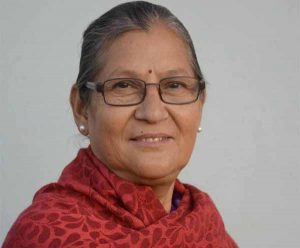 I met her for the first time when I was studying in Ratna Rajya Laxmi Campus. I was a student of Psychology and she was my teacher. Her personality, from that moment, was very impressive. She was a straightforward, strong woman. I wanted to be like her someday. The way she dealt with society, and the perception towards working women is praiseworthy. She is one of the most inspirational people I have met in my life.
Indira Basnet Koirala (Colleague)
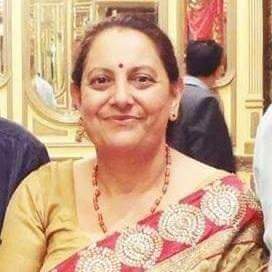 I used to hear about her works even before I met her in person. I knew she was an inspiration to every woman trying to pursue a career. She dealt with a lot of challenges, personally and professionally, but still kept going on with her work. Once I got to meet her, and get to know her better, I realized what an incredible person she was. Even if you have met her once, you can see how strong and independent she is. It’s not easy to come across someone like her.
Mallika Bhattarai (Family)
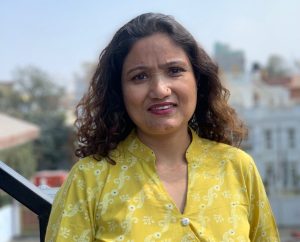 Knowing what she has gone through in her life, from personal tragedy to struggles she went through during her career, I really appreciate how hard she has worked. Our society still holds a narrow mindset when it comes to independent women. So, I can’t imagine how hard it must have been to do everything she did at that time. She is kind, generous, and treats everyone equally. She is one of the many women that I look up to.

Anupama Khunjeli: A trailblazer banker
Quick facts
Born on 14 Nov 1970 in Kathmandu
Went to St Mary’s High School, Lalitpur
Graduated from Shanker Dev Campus; post-grad from Ace Institute of Management
Joined banking sector in 1991 as a teller
Wife of Dr Rabindra Khunjeli
Mother to Swastika Khunjeli
I have always had a competitive streak in me. I was into sports from a young age and I wanted to be an athlete. During my school and college days, I used to compete against boys in sports like squash, badminton and tennis. I studied accounting at my high school in India. The only reason I chose accounting was to avoid studying other subjects like history. And that’s how I ended up in the banking sector.
I started as a teller at ANZ Grindlays Bank, now Standard Chartered, in 1991. I was still a college student at Shankar Dev Campus then. I worked there for 13 years, as a teller for most parts of that duration until I earned a double promotion. After gaining considerable experience of working in a bank, I went on to join Nabil Bank, where I spent six years.
I joined Mega Bank in 2010 as the deputy general manager and chief operating officer. There, I quickly rose through the corporate ranks, becoming the general manager and deputy CEO. In 2018, I was appointed the bank’s CEO. I was the first female bank CEO in Nepal.
Female CEOs are still uncommon. I was fortunate that the bank’s board recognized my ability and decided to trust me with the job.
I am strongly in favor of having more women in leadership roles, be it in the banking sector or any other institutions.
Our society still does not fully approve of women working long hours. When it comes to a job, there are still societal barriers for women. Many families bar their daughters and daughters-in-law from pursuing independent professional careers. They would rather see their daughters and daughters-in-law taking care of household affairs. I strongly believe that women should be given the liberty to choose and follow their careers.
I know I got lucky on this matter because both my parents and in-laws were supportive of me. My mother-in-law herself was a working woman and she was happy to see another self-employed woman in the house. I am where I am today because of that woman-friendly environment at home. And I wish for the same loving and nurturing environment for other girls and women. It is the only way to really empower women.
Women are expected to be good housewives as well as great professionals. Such dual expectations are never made for men. Women are able to work and advance till mid-management, but since they are expected to look after their family as well, they are overworked and unable to advance further to the leadership position.
If a woman wishes to work on her career, I say she must be allowed to do so. Let her decide for herself what she wants out of her life.
I believe in hard work, something I learned from my family members and my career. If you want something, work for it, and when you have enough to show, you demand it.
To accomplish something meaningful in your career, you must be committed and passionate about your work. If I didn't have a strong passion, I never would have accomplished what I have now. Choose the right career path, where you can develop your creativity and originality. If you are not passionate about what you do, your hard work will not reward you.
Lastly, I want to say that it’s never too late to join college. When I started working for ANZ Grindlays Bank in 1991, my job interfered with my studies. Despite years of banking experience, I felt that my ability to advance professionally was hampered by my lack of a master's degree. So, I decided to apply for an evening MBA program. I used to work in the bank during the day, attend my evening classes and stay up until midnight working on my college assignments. That’s how I received my MBA and qualified for promotion. Hard work can get you to the top, but you must be willing to fight for it. No one is going to hand you what you want on a platter.
About her
Abhinav Narsingh Rana (Brother)
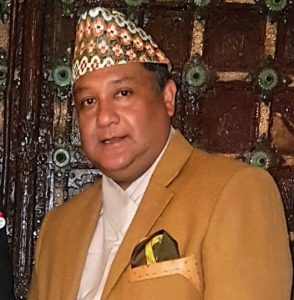 My sister has a pleasant personality. She deeply respects other people. She believes she can get inspiration and learn from them. Professionally, I think, our father influenced her and me. A former agriculture secretary, our father took his job seriously. She is bold and competitive, who never hesitates to take on challenges.
Anil Keshary Shah (Colleague)
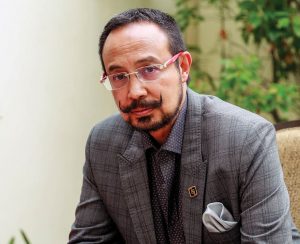 Anupama is one of the best bankers that I’ve had the pleasure of working with. We started our banking career around the same time, so, in a sense, we grew up as bankers together. She was my supporter as well as a competitor. I have always admired her ability to grasp even the most complex technical skills and excel in them. Along with being a banker of the highest standards, Anupama is also an exceptional friend, an amazing mother, spouse, sister, daughter, and daughter-in-law.
Kishori Shah (Friend)
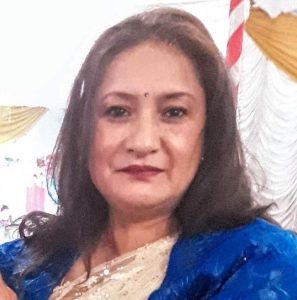 We have been friends since our school days. Even if we communicate after a gap of a couple of years, it doesn’t feel like we are strangers. I have never seen her in an angry mood. She has a bold, vocal and extroverted personality. She is also a perfect entertainer. It never feels boring to talk for hours with her.

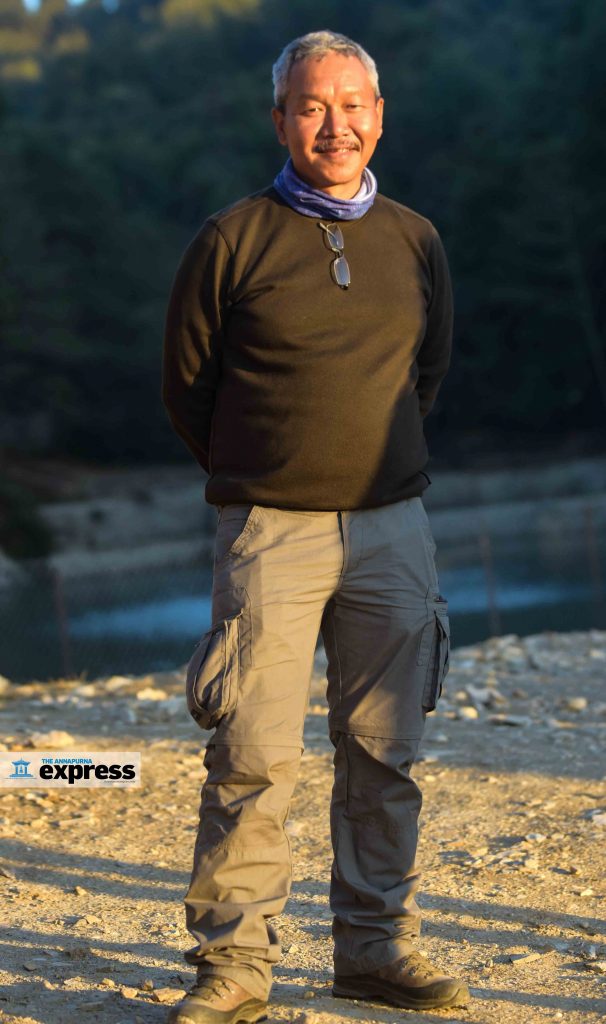
Capt Siddartha Jang Gurung: Aviation rescue specialist
Quick facts
Born on 20 April 1975 in Lalitpur
Went to Alperton High School, London, UK
Completed flight course from Florida Flight Academy, US
Started rescue flights from 1995
Husband of Sraddha Gurung
Father to Devanshi Gurung and Shlok Jung Gurung
I have been flying helicopters for 27 years now, and have a long experience of flying in the mountainous terrain of Nepal. I started as a co-pilot in Nepal Airways Helicopter Service in 1994 and have worked in five companies since.
I left Nepal Airways after two years to join Manakamana Helicopters. But Manakamana Helicopters stopped operation after two years, so I started flying with Karnali Air. I worked with Karnali Air for 10 years, and learned a lot there. Unfortunately the company shut down as well, and my job took me to Fishtail Air. I joined Simrik Air in 2011, where I work as the executive director.
So, my career in the aviation sector has been quite long and with many airlines. I wouldn’t have been in this industry had it not been for Narayan Singh Pun, a former Nepal Army pilot. I met Pun when I was a young boy in Britain, where my father, also an army officer, was posted at the Nepali Embassy as a military attaché.
My ancestral home is Lamjung and I was born in Lalitpur. I was 13 when I went to the UK with my family. My father used to entertain many Nepali guests at our residence, and one of them was Pun. It was Pun who inspired me to become a pilot. He advised me to take basic helicopter training in Britain and join the army as a pilot.
After completing the pilot training in the US, I was looking forward to joining the army, but my father, who had retired as a Brigadier General by then, advised me against becoming a military pilot. He told me that it was a difficult job.
So, I joined private airlines instead. And when Pun started Karnali Air, I went to work with him. I worked there for a decade. My journey in mountain rescue started in 2009. Before that, Nepal had only a handful of helicopters that could only fly at an altitude of around 4,000 meters. High altitude air rescue scene in Nepal changed after Fishtail Air brought B3 helicopters, which could go up to 7,000 meters.
I can still remember when a Slovakian climber got stuck in Langtang in 2009, and needed to be rescued. But we had no training, nor the equipment to extract him from the mountains. So, a Swiss rescue team was called in, and they collaborated with Fishtail Air for the rescue. It was agreed that a Nepali pilot would conduct the rescue under the supervision of the Swiss team. That Nepali pilot was none other than my dear friend Capt. Sabin Basnet. The team located the climber but he had already died in the mountains. His body had to be carried out from the mountains. This is how the first technical rescue was performed in Nepal.
Understandably, it was not possible for international rescuers to come to Nepal for every rescue. So, the Swiss team decided to train three pilots, including Basnet and me. That’s how I became a rescue pilot.
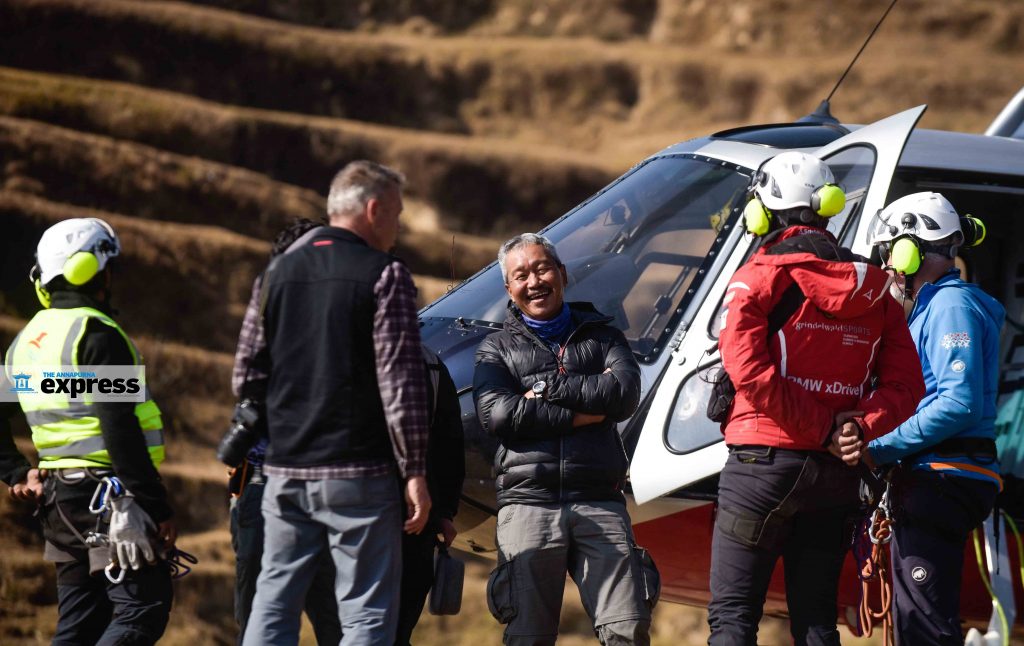 I can still remember the second rescue mission of 2010. Two foreigners were stuck on the north side of Camp 3 of Ama Dablam at 21,000 feet. My friend Basnet went to rescue them, but he and his crewmate Engineer Purna Awale died in a crash before they could reach the rescue site. So, it was upon me and Capt. Ashish Sherchan to bring the bodies back and rescue the foreigners. It was my first mountain rescue mission, and a quite difficult one mentally and emotionally. I didn’t fly for a month after the incident.
When I got back to flying, I started participating in rescue training courses and performing rescue missions regularly.
I was also deployed to rescue the Taiwanese couple, who had gone missing in Rasuwa for more than a month, in 2017. They had fallen off a cliff and into a ravine. When my team reached there, we found the young man alive but his partner had died. When you are a rescue pilot, you come across many incidents like this.
I was also involved in several rescue missions after the 2015 earthquakes. As the Nepal Army had only one rescue helicopter, private sector helicopters were also deployed to lift off the injured people to hospital.
The aviation culture in Nepal, particularly the rescue flights, started late, but it is growing. I am currently active in regular passenger flights and rescue flights. I am also a certified rescue instructor. I currently fly Airbus H125 and Bell47 helicopters. Flying in Nepal’s mountains requires technical skills and experience. It is a risky job but I personally find it immensely rewarding, as I get to help those who are in distress.
 About him
Capt Rameshwar Thapa (Senior Colleague)

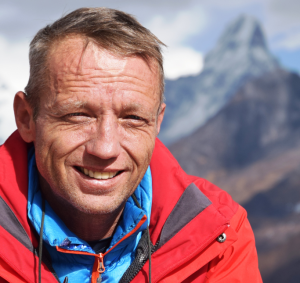 I have been working with him for more than a decade now and being a helicopter pilot, I can say that he has contributed a lot in Nepali helicopter rescue fraternity. My team has been conducting rescue training for Nepali pilots and we always coordinate with Capt. Siddartha. It is so good to work with him. He is concerned about rescue missions, which is very important for a country like Nepal.
Ang Tashi Sherpa (Colleague)
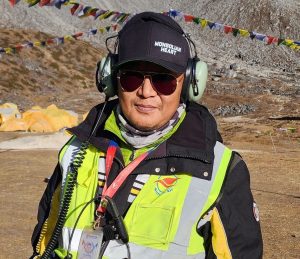 I have known Capt. Siddartha from the time he started his flying career. He is a brilliant pilot. Without him, many rescue missions would not have been accomplished in Nepal. I am a rescue specialist on the ground and coordinating with him is so easy. Working with him is a learning experience. He has trained many rescue pilots, for which we should all be grateful to him.


