


Oli, Dahal and President Xi

KathmanduPushpa Kamal Dahal ‘Prachanda’ has often sought to discredit the government led by his Nepal Communist Party co-chairman KP Oli. Never a patient man, he is in a hurry to be prime minister again. If not, party chairmanship would do. As Oli won’t give up either post easily, Dahal wants to build international pressure for his ouster. He jets off to the US, close Oli aides suspect, for a secret rendezvous with senior American officials, on the handy pretext of getting a treatment for his wife. Dahal wants the Americans to know he will always be more accommodating of the US interests in Nepal (read: Asia-Pacific Strategy) than the ‘pro-China’ Oli can ever be.
Dahal then ensures that the Indian Embassy letter asking the Nepali government not to stop its contingents of fruits and vegetables is leaked online before it comes to the notice of the prime minister. How content must he have felt to make PM Oli helplessly admit of being kept in the dark by his own officials! Dahal’s proxies in the NCP then invite the son of the Venezuelan dictator Nicolas Maduro to Nepal, even as the Venezuelan government is under American sanctions for its anti-democratic activities. With Dahal expertly hiding his tracks, the ‘clueless’ government of Oli is again blamed.
The former Maoist supremo has already alerted the Indian establishment that Oli is merely warming the PM’s seat and it is only a matter of time before he gets his turn. Of course, he had to reiterate this right on the eve of PM Oli’s New Delhi visit to take part in Narendra Modi’s second swearing-in as prime minister. His message to the Chinese is as self-serving: on becoming the prime minister in 2009, he was someone who dared visit China before India. Which other Nepali leader could take such a monumental risk to show his fealty?
Oli knows Dahal is a wily old fox. But so is the blockade-busting prime minister. With Dahal determined to play hardball, Oli is also dilly dallying on a quick settlement of war-time human rights cases. Oli is aware that so long as the peace process is incomplete, Dahal will always have to look over his soldiers whenever he ventures out of the country. Former child soldier Lenin Bista has been quite successful in convincing the Europeans in particular that ex-Maoist commanders like Dahal and Baburam Bhattarai are ‘war criminals’.
Expect a lot of political churn when Chinese President Xi comes to town later this year. The Indians have already gotten a whiff of his prospective visit and they are not pleased. The government, meanwhile, wants to complete homework on at least a few big-ticket projects for President Xi to sign. Till date the Oli government has made no bones about its proximity to China and its wholesale acceptance of the BRI framework. India—ever skeptical of any western presence in its traditional sphere of influence but also increasingly of Chinese inroads here—is still trying to work its modus vivendi on the roles of the two powers in this region. Xi’s visit could just tip the balance in the favor of the Americans.
With the Chinese president’s visit likely to open new fault-lines in Nepali geopolitics, Dahal may soon get to play another of his dirty tricks to boot Oli out of power.

Children of slain journalists find succor. But for how long?
The decade-long Maoist war, which started in 1996, filled large swathes of the country with terror. Rising inequality and dissatisfaction with the state inspired many Nepali youths to join an insurgency that ended up killing around 17,000 people and maiming and displacing countless others. The war officially ended in 2006 but for many the fight for justice continues.
We’ve read hundreds of articles describing the miserable condition of the Maoist guerillas, the state security personnel, and ordinary citizens alike. But not much has been written about the journalists who were tortured, disappeared or brutally murdered during the war, and even less about their families who continue to live with the wounds that may never heal. Children of the slain journalists not only lost a parent but also an opportunity for a happy childhood.
With the government paying little attention to these children, an unnamed organization under The Asian Journalist Association has been financing their education since the war ended with the help of funds from the Australian Press Association.
We tried to interview some of these children to find out their current situation and their aspirations for the future, but most of them chose to stay mum because of security concerns. Only two were willing to speak on record.
Dev Kumar Acharya and Navraj Sharma were two of the journalists murdered during the war. Their children who, despite having to overcome trauma since a tender age, are still fighting for justice for their families.
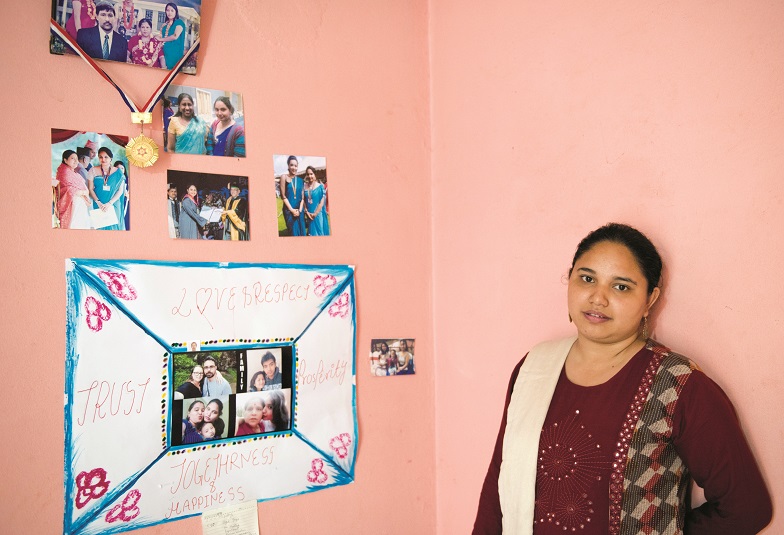
Born in Jhapa, Trishna Acharya is the second daughter of Dev Kumar Acharya, who worked in several newspapers like ‘Janaastha’, ‘Janadisha’, and ‘Swadhin Samwad’. Acharya was abducted on 23 July 2002 on the accusation of being a Maoist and his corpse was delivered to the family the following day. “When we got his dead body, his thumbs were mutilated and it was clear that he was hung upside down and tortured for an entire day,” says Trishna. Then began the struggle for her family as they had to face social ostracism and even rape threats. A small cottage industry of light snacks on which the family depended was also seized. Trishna left the village with a traumatized brother, an agonized mother, and a confused elder sister.
Trishna then came in contact with the organization under the Asian Journalist Association which assisted her financially to pursue her studies. She recently completed her Masters of Arts degree from Tribhuvan University with a gold medal. “My father dreamt of becoming a gold medalist and was working on his Master’s thesis just prior to his murder, so I dedicated my medal to him,” says Trishna.
Her case was filed with the Truth and Reconciliation Commission in September 2014 with the assistance of the organization itself.
“My family members—and even my nephew—still get threats. All I want now is to regain the identity and dignity that my family lost years ago. I want to be the last girl with a tragic story like mine,” says Trishna.
Born in Kalikot, Sangita is the second daughter of Navraj Sharma, who is considered the first journalist killed during the insurgency. He was the editor of a weekly named ‘Kadam’ and also worked at a radio station. Sharma was well liked in the community and his murder came as a complete shock.
“There was a program in my village from where lots of men including my father were abducted. All were released except my father,” says Sangita. What makes the case more disturbing is the fact that the reason behind the abduction and murder of her father is still unknown. After the passing away of her mother a few years later, Sangita came in contact with the organization which then helped her pursue her studies.
She is currently pursuing a Bachelor’s degree in business management and is in her second year. She wants to work in the banking sector, but is also considering a career in the civil service. Her two siblings have been taken under the wings of the SOS Children Village at Sanothimi where they are pursuing their studies.
Sangita’s case has also been registered with the Truth and Reconciliation Commission, but justice has proved elusive so far.
Besides Trishna and Sangita, the organization currently supports 24 other children of conflict victims. But with the funding from the Australian Press Association coming to an end in 2020, the children’s future is far from secure. “Even when the funding stops, we’ve decided to personally contribute to educate these children,” says one of the two chairmen of the organization, who prefers to work quietly and remain anonymous.
But the question of how long these children can depend on an NGO remains unanswered. The state has a responsibility to take care of thes
The decade-long Maoist war, which started in 1996, filled large swathes of the country with terror. Rising inequality and dissatisfaction with the state inspired many Nepali youths to join an insurgency that ended up killing around 17,000 people and maiming and displacing countless others. The war officially ended in 2006 but for many the fight for justice continues.
We’ve read hundreds of articles describing the miserable condition of the Maoist guerillas, the state security personnel, and ordinary citizens alike. But not much has been written about the journalists who were tortured, disappeared or brutally murdered during the war, and even less about their families who continue to live with the wounds that may never heal. Children of the slain journalists not only lost a parent but also an opportunity for a happy childhood.
With the government paying little attention to these children, an unnamed organization under The Asian Journalist Association has been financing their education since the war ended with the help of funds from the Australian Press Association.
We tried to interview some of these children to find out their current situation and their aspirations for the future, but most of them chose to stay mum because of security concerns. Only two were willing to speak on record.
Dev Kumar Acharya and Navraj Sharma were two of the journalists murdered during the war. Their children who, despite having to overcome trauma since a tender age, are still fighting for justice for their families.
Born in Jhapa, Trishna Acharya is the second daughter of Dev Kumar Acharya, who worked in several newspapers like ‘Janaastha’, ‘Janadisha’, and ‘Swadhin Samwad’. Acharya was abducted on 23 July 2002 on the accusation of being a Maoist and his corpse was delivered to the family the following day. “When we got his dead body, his thumbs were mutilated and it was clear that he was hung upside down and tortured for an entire day,” says Trishna. Then began the struggle for her family as they had to face social ostracism and even rape threats. A small cottage industry of light snacks on which the family depended was also seized. Trishna left the village with a traumatized brother, an agonized mother, and a confused elder sister.
Trishna then came in contact with the organization under the Asian Journalist Association which assisted her financially to pursue her studies. She recently completed her Masters of Arts degree from Tribhuvan University with a gold medal. “My father dreamt of becoming a gold medalist and was working on his Master’s thesis just prior to his murder, so I dedicated my medal to him,” says Trishna.
Her case was filed with the Truth and Reconciliation Commission in September 2014 with the assistance of the organization itself.
“My family members—and even my nephew—still get threats. All I want now is to regain the identity and dignity that my family lost years ago. I want to be the last girl with a tragic story like mine,” says Trishna.
Born in Kalikot, Sangita is the second daughter of Navraj Sharma, who is considered the first journalist killed during the insurgency. He was the editor of a weekly named ‘Kadam’ and also worked at a radio station. Sharma was well liked in the community and his murder came as a complete shock.
“There was a program in my village from where lots of men including my father were abducted. All were released except my father,” says Sangita. What makes the case more disturbing is the fact that the reason behind the abduction and murder of her father is still unknown. After the passing away of her mother a few years later, Sangita came in contact with the organization which then helped her pursue her studies.
She is currently pursuing a Bachelor’s degree in business management and is in her second year. She wants to work in the banking sector, but is also considering a career in the civil service. Her two siblings have been taken under the wings of the SOS Children Village at Sanothimi where they are pursuing their studies.
Sangita’s case has also been registered with the Truth and Reconciliation Commission, but justice has proved elusive so far.
Besides Trishna and Sangita, the organization currently supports 24 other children of conflict victims. But with the funding from the Australian Press Association coming to an end in 2020, the children’s future is far from secure. “Even when the funding stops, we’ve decided to personally contribute to educate these children,” says one of the two chairmen of the organization, who prefers to work quietly and remain anonymous.
But the question of how long these children can depend on an NGO remains unanswered. The state has a responsibility to take care of these children who have already suffered so much.

Children of slain journalists find succor. But for how long?
The decade-long Maoist war, which started in 1996, filled large swathes of the country with terror. Rising inequality and dissatisfaction with the state inspired many Nepali youths to join an insurgency that ended up killing around 17,000 people and maiming and displacing countless others. The war officially ended in 2006 but for many the fight for justice continues.
We’ve read hundreds of articles describing the miserable condition of the Maoist guerillas, the state security personnel, and ordinary citizens alike. But not much has been written about the journalists who were tortured, disappeared or brutally murdered during the war, and even less about their families who continue to live with the wounds that may never heal. Children of the slain journalists not only lost a parent but also an opportunity for a happy childhood.
With the government paying little attention to these children, an unnamed organization under The Asian Journalist Association has been financing their education since the war ended with the help of funds from the Australian Press Association.
We tried to interview some of these children to find out their current situation and their aspirations for the future, but most of them chose to stay mum because of security concerns. Only two were willing to speak on record.
Dev Kumar Acharya and Navraj Sharma were two of the journalists murdered during the war. Their children who, despite having to overcome trauma since a tender age, are still fighting for justice for their families.
Born in Jhapa, Trishna Acharya is the second daughter of Dev Kumar Acharya, who worked in several newspapers like ‘Janaastha’, ‘Janadisha’, and ‘Swadhin Samwad’. Acharya was abducted on 23 July 2002 on the accusation of being a Maoist and his corpse was delivered to the family the following day. “When we got his dead body, his thumbs were mutilated and it was clear that he was hung upside down and tortured for an entire day,” says Trishna. Then began the struggle for her family as they had to face social ostracism and even rape threats. A small cottage industry of light snacks on which the family depended was also seized. Trishna left the village with a traumatized brother, an agonized mother, and a confused elder sister.
Trishna then came in contact with the organization under the Asian Journalist Association which assisted her financially to pursue her studies. She recently completed her Masters of Arts degree from Tribhuvan University with a gold medal. “My father dreamt of becoming a gold medalist and was working on his Master’s thesis just prior to his murder, so I dedicated my medal to him,” says Trishna.
Her case was filed with the Truth and Reconciliation Commission in September 2014 with the assistance of the organization itself.
“My family members—and even my nephew—still get threats. All I want now is to regain the identity and dignity that my family lost years ago. I want to be the last girl with a tragic story like mine,” says Trishna.
Born in Kalikot, Sangita is the second daughter of Navraj Sharma, who is considered the first journalist killed during the insurgency. He was the editor of a weekly named ‘Kadam’ and also worked at a radio station. Sharma was well liked in the community and his murder came as a complete shock.
“There was a program in my village from where lots of men including my father were abducted. All were released except my father,” says Sangita. What makes the case more disturbing is the fact that the reason behind the abduction and murder of her father is still unknown. After the passing away of her mother a few years later, Sangita came in contact with the organization which then helped her pursue her studies.
She is currently pursuing a Bachelor’s degree in business management and is in her second year. She wants to work in the banking sector, but is also considering a career in the civil service. Her two siblings have been taken under the wings of the SOS Children Village at Sanothimi where they are pursuing their studies.
Sangita’s case has also been registered with the Truth and Reconciliation Commission, but justice has proved elusive so far.
Besides Trishna and Sangita, the organization currently supports 24 other children of conflict victims. But with the funding from the Australian Press Association coming to an end in 2020, the children’s future is far from secure. “Even when the funding stops, we’ve decided to personally contribute to educate these children,” says one of the two chairmen of the organization, who prefers to work quietly and remain anonymous.
But the question of how long these children can depend on an NGO remains unanswered. The state has a responsibility to take care of these children who have already suffered so much O

Millions spent on clearing weeds
Millions have been squandered from the Prime Minister Employment Program due to poor planning and improper implementation. Many local units of Province 5 have spent an inordinate amount of money in just clearing weeds. About Rs 500 million has been spent on various programs that have no clear long-term impact. Program officials blame hasty planning.
Rs 7 million has been spent just in weeding gardens and cleaning roads in Tilottama municipality in the district of Rupandehi. Earlier too, a cleaning program with a budget of Rs 5 million was organized in the
municipality. “Even after the program was completed, we had to employ people for cleaning and clearing weeds in order to spend the allocated budget,” says Devendra Gyawali, a municipal officer. The majority of the 236 people employed in Tilottama municipality were women, who cleared weeds in Butwal’s
Belhiya road.
The PM employment program has a provision that allows the hiring of laborers in various municipal programs. However, Tilottama municipality has wasted a lot of money in seemingly pointless work. According to Madhav Giri, the coordinator of the employment program in the municipality, Rs 4.4 million has been spent on wages alone. Rs 5.5 million was spent by the municipality on cleaning the city, planting trees and clearing up a field. Laying drains, maintaining health posts and constructing hospital roads are the only tasks the municipality has invested in that have meaningful long-term impact.
Gaumukhi rural municipality in the district of Pyuthan has also spent Rs 3.6 million on gratuitous activities. As many as 600 people were employed and Rs 3.6 million spent by this rural municipality in just nine days to exhaust the allocated budget. In nine local units in Pyuthan, more than 2,500 people—of whom 70 percent are women—have been employed.
Meanwhile, some municipalities in Rupandehi have still not shown an interest in implementing the PM employment program. Chief administrative officer Khyam Bahadur Thapa of Siddharthanagar municipality says, “Most of the municipality’s structures are concrete. Here the only work that needs to be focused on are cleaning and afforestation. Clearing weeds, just for the purpose of employing people and spending the budget, cannot be justified,” he says.
Many have criticized the PM employment program, arguing that billions of rupees are being spent for cheap popularity. Central member of the Nepal Bar Association Shiv Raj Pandit says that the criteria for selecting an unemployed person for a job is flawed. “There isn’t much difference between giving away money to someone and employing them for clearing weeds,” he says. He adds that the lives of the unemployed won’t improve unless the PM employment program is linked to productive activities. “The program is good, but because the implementation was not effective, it has been unable to bring about positive changes. We need to do better in the upcoming fiscal,” he says.


